Dethleffs presents
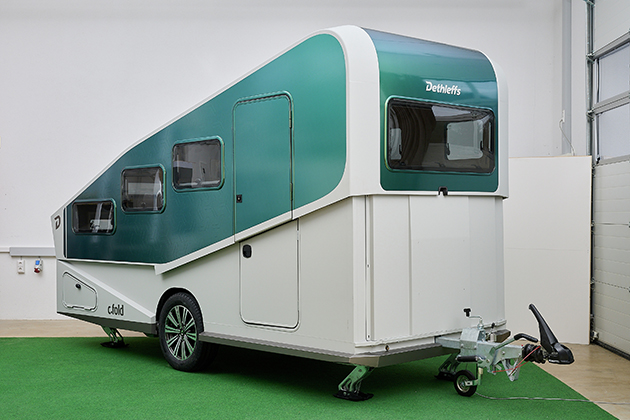
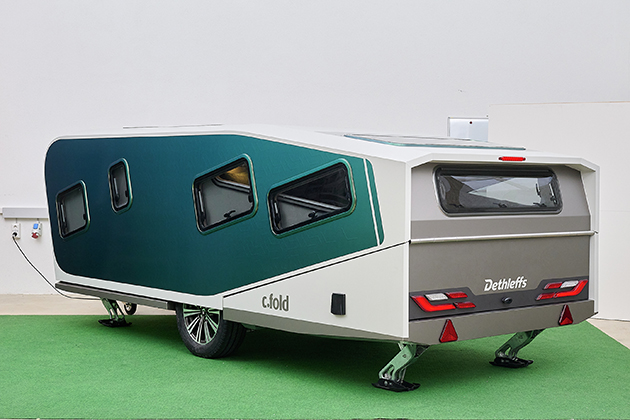
a truly extraordinary caravan: it's the concept named “
c.fold”, a study for future applications. It is being unveiled at the
CMT, the major trade fair in
Stuttgart, open from 17 to 25 January
2026. Since 2017, with the "Destination Future" initiative,
Dethleffs has been setting the standard in sustainable, forward-looking caravanning. The programme aims to develop innovative solutions combining electromobility and sustainability, redefining travel for future generations. The latest proposal in this field is precisely
c.fold, a
revolutionary folding caravan designed specifically
for electric vehicles.
The inspiration for
c.fold came from the Marchart couple, caravan enthusiasts and seasoned travellers for decades now. Looking for a caravan that could also be towed by their electric car, they turned to Dethleffs. Their idea proved convincing: "This development fits perfectly within our ‘Destination Future’ innovation project," explains Richard Angerer, Product Manager at Dethleffs. To complete the study,
Dethleffs invested over a year of development time at the Innovation Camp, the exclusive ideas laboratory for innovative projects in Baienfurt. The focus was on three key aspects: extended range, reduced weight and high flexibility thanks to modular interiors. The most important feature of the
c.fold study is
its innovative folding mechanism. The upper part of the folding caravan lowers simply at the press of a button before setting off. Thanks to its particularly aerodynamic shape, its reduced width of 1.90 metres and its reduced height of just 1.65 metres when folded, aerodynamics and air resistance are significantly improved compared with conventional caravans.
"Thanks to its optimised aerodynamics and compact dimensions, the c.fold is suitable not only for electric tow vehicles, but also for smaller vehicles with combustion engines. Based on CFD (Computational Fluid Dynamics) simulation calculations, an electric car towing the c.fold can travel around 100 kilometres further on a single battery charge compared with a towing combination involving a conventional caravan model," explains Oliver Reuther, head of the Innovation Camp. The prototype is fitted with independent wheel suspension featuring Goldschmitt air springs.
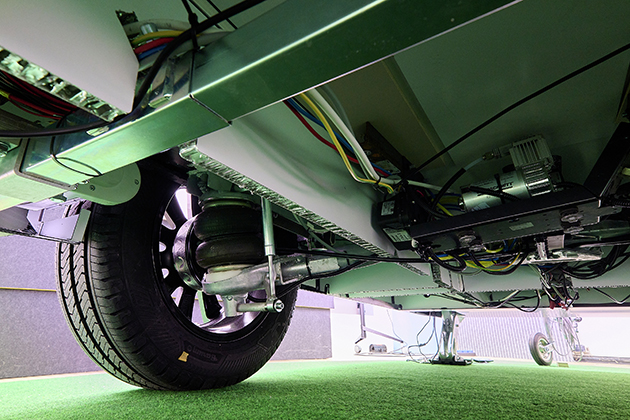
This system ensures a comfortable journey and allows precise levelling of the caravan while stationary, a technical solution that is currently unique on the market. In addition, this trailer is equipped with an integrated scale that monitors the total weight and prevents overloading. The Dethleffs c.fold has compact dimensions, useful for parking and storage: with a width of just 1.90 metres and a total length of under 5.45 metres, it fits into a standard car parking space. "The c.fold can even be parked in a covered parking space or a garage," explains product manager Richard Angerer.
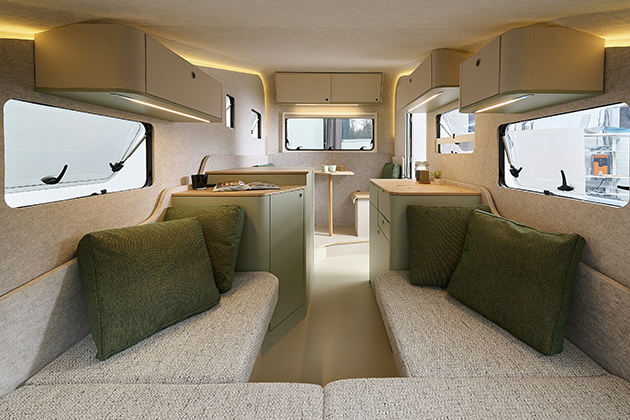
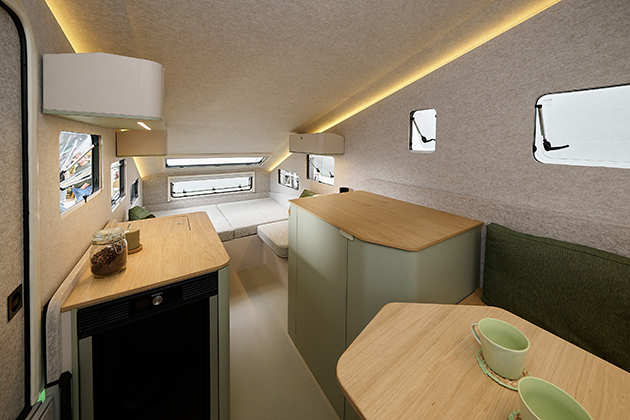
Modular furnishings, large windows and indirect lighting that skilfully draws the eye upwards make the interior of the c.fold spacious and bright. At the rear, where the beds are located, the c.fold is tall enough for comfortable seating, while at the front entrance it offers a height of 190 centimetres. The vehicle is fitted with a small kitchenette with a sink and drawers, as well as a portable induction hob. The lockable overhead cupboards feature an ingenious rotation mechanism that keeps them permanently level, whether the upper section is extended or lowered.
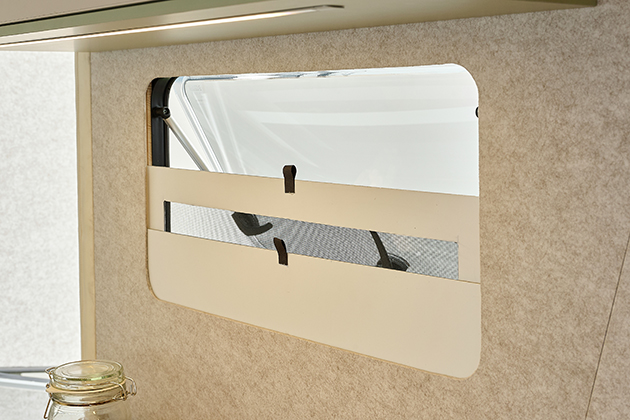
This ensures that all items remain secure while driving. A particularly clever feature: the blackout blinds and insect screens are integrated into the side wall to save space and minimise bulk.
Another strong point is the retractable WC compartment. When not in use, it disappears beneath a platform to save space, making the room more open and spacious. When needed, it can be raised, and the upper part is closed off with a matte felt curtain. Inside, with a separate window, a Clesana dry toilet and a washbasin are permanently installed. The c.fold features a modular interior concept and folding furniture for easy access to the storage compartments underneath.
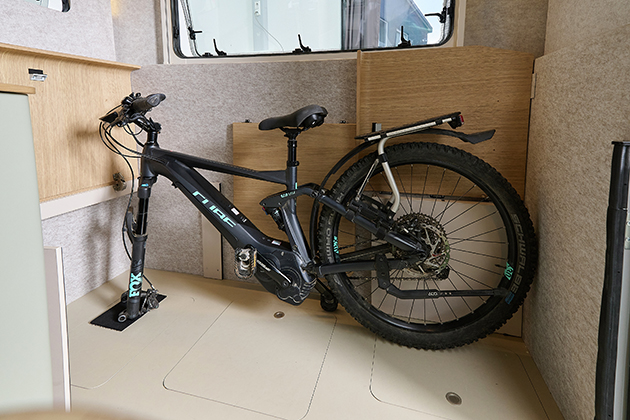
The deliberately simple seating at the entrance can be folded away. The resulting storage space acts as a garage, which can be loaded through the entrance door, for example to carry e-bikes and other sports equipment. The Marchart family had requested this feature specifically to transport and store their e-bikes securely against theft. The seating and resting cushions of the c.fold are also innovative and well designed: instead of the usual slatted bases, cushions and comfortable spring elements are already built in. The storage compartment underneath can be accessed with a single handle, without having to remove the cushions. Dethleffs uses sustainable materials: felt on the interior walls creates a cosy atmosphere, while light oak veneer surfaces complete the caravan's overall modern look. The wall structure is made from Alucore, a particularly lightweight and stable aluminium composite with a honeycomb structure, and the wall insulation is made from recycled PET.
%2DPrint%20%2D%20Copia.jpg)
Dethleffs has already used this innovative material, derived from recycled PET bottles, in its e.home ECO motorhome concept, as well as the linoleum flooring made from renewable raw materials. Solar panels for power generation are fitted to the vehicle's roof. On board there are also a 2,000-watt inverter and two 150 Ah lithium-ion batteries. The integrated manoeuvring system makes parking easier, both on the move and when stationary. The concept caravan is also equipped with air conditioning. Despite these technical refinements, the c.fold weighs just 775 kilograms. "With c.fold, we are setting new standards for the future of caravanning. Our goal is to bring innovative solutions to market in the years ahead as well, living up to our role as pioneers in caravanning," explains Bernhard Kibler, CEO of Dethleffs. "c.fold is another important step towards sustainability and comfort in electric vehicle travel, and towards realising our vision of the ‘holiday destination of the future’."

.jpg)

 App Camperonline