Pets on the road, widespread culture and travel literature:
from the Salone del Camper, ideas for travelling mindfully.
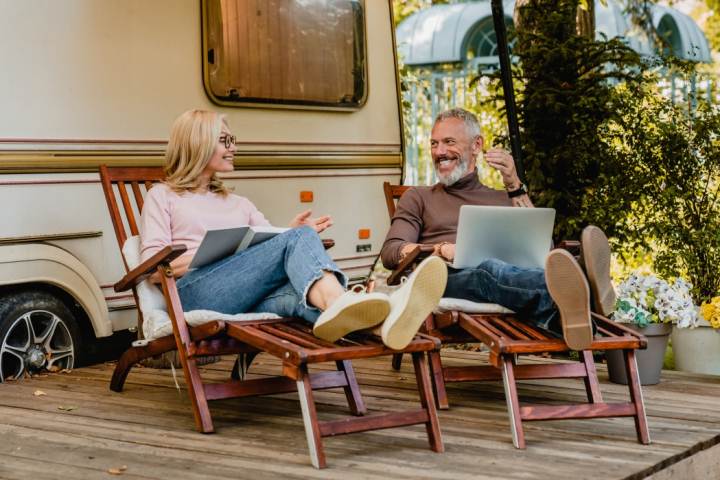
One motorhome owner in four travels with their own dog: stops, legs of the journey and daily routines are often built around the animal’s needs. Open monuments turn the road into an opportunity for cultural discovery, even away from the main tourist flows. Literary parks, audiobooks and podcasts make the journey a story to be read, listened to and travelled through. All in complete safety.
A motorhome journey is not born solely from a destination to reach, but from interests, habits and curiosity that shape the experience: the time devoted to a pet, a cultural detour, or a book chosen to better explore an area.
The Your Travel Style survey, promoted by the Salone del Camper - Caravan Accessories Routes and Destinations, taking place at the Fiere di Parma from 12 to 20 September 2026 in collaboration with APC - Associazione Produttori Camper, offers the starting point for describing an outdoor tourism increasingly less tied to the destination alone.
With over 107,000 visitors, more than 110,000 square metres of exhibition space, 310 exhibitors from 22 countries and more than 600 recreational vehicles on display at the last edition, the Salone del Camper confirms itself as the leading showcase for the sector, as well as a place capable of capturing the new ways of experiencing outdoor tourism, built around the interests of those on board: pets on the road, widespread culture and travel literature.
When
travelling with a dog, the itinerary does not depend solely on the destination: timing, stops and the animal’s wellbeing also matter.
According to the Salone del Camper’s
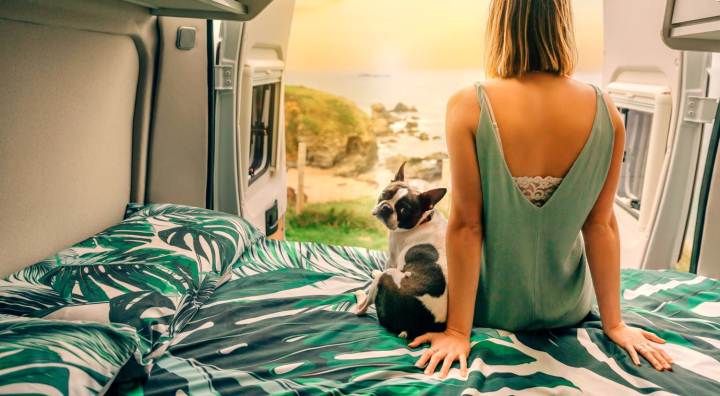
Your Travel Style Survey, 25.7% of motorhome owners - 1 in 4 - travel with their pet. This is a choice that affects how the days are organised: shaded stops, fresh water and green spaces are needed, along with routes that are not too long, and beaches, paths and villages that are genuinely accessible to animals as well.
Dogs follow circadian rhythms: they are more active during the cooler hours, at dawn and in the late afternoon, and tend to rest when the sun is high. In a motorhome, this need becomes a practical travel criterion: walks are brought forward, the hottest hours are avoided, suitable stopover areas are chosen, and driving and breaks are alternated in a more balanced way. The vehicle makes this organisation easier because it brings together, in a single space, routines, familiar belongings and freedom of choice.
Authentic landscapes and the freedom to explore - cited by 75% and 69% of motorhome owners respectively - depend not only on the destination, but also on the quality of hospitality along the way. For those travelling with a pet, this means being able to rely on equipped stopover areas, clear rules and pet-friendly services. The issue, however, is not just about comfort.
Travelling with a pet also requires attention to health and documentation requirements: from 22 April 2026, EU Regulation 2026/20 will come into force, supplementing current animal health rules and introducing a safer, more uniform and transparent framework for non-commercial travel. Microchipping, the European pet passport and rabies vaccination remain the essential references, and ENPA has published an updated practical guide with everything you need to know before setting off.
Culture on the move: from hidden treasures to immersive museums
The past unfolds along the road. On a motorhome journey, culture is not always a declared destination. Sometimes it arises from a detour, from a village chosen along the way, from a stop that lengthens because
something has sparked curiosity. It is in this spirit that widespread initiatives such as Monumenti Aperti 2026 become particularly interesting for those travelling freely. Not because they impose an itinerary, but because they offer opportunities for discovery along the route: until 8 November 2026, over 800 sites across 85 municipalities and 18 regions will open free of charge, often in settings far removed from the main tourist flows.
For motorhome travellers, the value lies not only in gaining access to places normally closed to the public, but also in the chance to turn a stop into a cultural leg of the journey, choosing from the calendar the weekend and municipality closest to their route, in keeping with the slow pace of travel. It also lies in listening to the accounts of those who live in and look after these places: students, volunteers, local guides and residents, so that the stop ceases to be a mere technical break and becomes an encounter with the local area. The future of museums speaks new languages. Cultural spaces are changing their form of expression: no longer just rooms to visit, but experiences to be lived through digital content, immersive routes and solutions designed for accessibility. For motorhome travellers, this logic is already familiar: apps, digital controls and connected systems simplify management, comfort and independence. In museums too, technology works best when it guides, facilitates and personalises the experience.
At the Mart in Rovereto (Trento), for example, alongside classic audio guides there are also digital guides on Telegram and Messenger, storytelling on Alexa, playlists on Spotify and video content on YouTube. At the same time, the museum offers accessibility tools such as video guides in Sign Language, tactile routes, guides in Augmentative and Alternative Communication (AAC), and noise-cancelling headphones.
At the Maxxi in Rome, the Connessioni Culturali project has trialled virtual and augmented reality to remotely connect the museum with two rooms of the Vittoriale degli Italiani (Gardone Riviera); the Grande Maxxi programme also includes accessible storage facilities, research spaces and digital technologies applied to art, architecture and design.
In Turin, the National Cinema Museum has brought virtual reality into the visit with CineVR, described by the museum as Italy’s first permanent cinema hall dedicated to virtual reality, along with projects such as Cabiria Experience, which combines silent cinema, the metaverse and artificial intelligence.
The page and the road: reading (and listening to) the local area safely
Literary parks: reading places through their authors. In Italy there is a network of itineraries designed for those who want to read a local area through those who have inhabited it with words: they are called
Literary Parks (Parchi Letterari). They are neither museums nor waymarked trails: they are local communities that celebrate the places linked to a particular author - the landscapes that inspired them, the villages that appear in their pages, the roads they travelled - building up a system of visits, events, walks and in-depth materials. The network today numbers over 60 communities across 15 regions, with parks dedicated to Calvino, Pavese, d'Annunzio, Deledda, Camilleri, Virgil, Petrarch and many others.
For motorhome travellers, this format works because it opens up possibilities along the route, often exactly where least expected. A stop can become a narrated walk, an evening event, a visit to a house-museum, or simply a different way of travelling through a landscape, reading in these places the traces left by the authors who wrote about them.
The new travel literature: listened to, not just read. Audiobooks and podcasts are enjoyed in the quiet of the cab as the landscape rolls by outside, without interrupting the rhythm of driving. Those who spend hours behind the wheel have at their disposal time that elsewhere would be mere transit: in a motorhome, it is already reading time. There is, however, a practical distinction to be made: the denser or more demanding content is best saved for stops, when the mind is free. While driving, travel stories, light-hearted episodes and voices capable of accompanying the landscape without distracting work best, with both hands always on the wheel. RaiPlay Sound dedicates a section to audio documentaries and travel podcasts, free and accessible directly from a smartphone: simply download the app before setting off and choose content in tune with the route. In this way, even time on the move becomes part of the experience, and the next stop arrives already filled with images and impressions.
From
12 to 20 September 2026, at the Fiere di Parma, the
Salone del Camper (
discounted tickets can be purchased here) will be the place to see recreational vehicles, accessories and on-board solutions up close, as well as to gather travel ideas and discover lesser-known destinations. Whether setting off with a dog, following a cultural route, or choosing a book to listen to along the way, the motorhome makes it possible to turn a passion into a journey, and a stop into an experience.


 App Camperonline