Some milestones are simply expressed as a number, whilst others tell the story of an industrial journey. The key result of over 500,000 beds made since 2021 by Lippert EMEA – the division of Lippert Components, Inc. (Lippert™), with locations in Europe, the Middle East and Africa – is both a significant quantitative accomplishment and, even more importantly, the culmination of years of technological, production, and strategic evolution. Half a million is a consolidated, documented base figure; in fact, the number is even higher, including production before data were recorded systematically.
The bed factor in travel experience
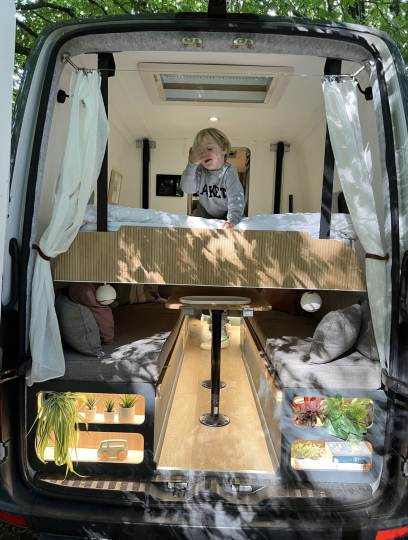
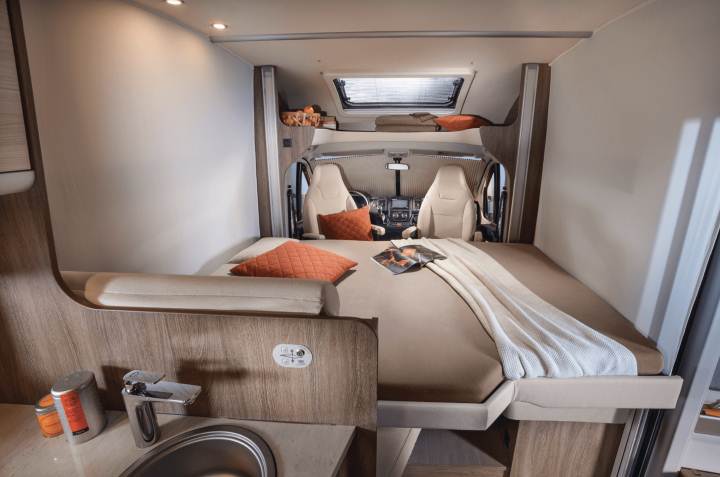
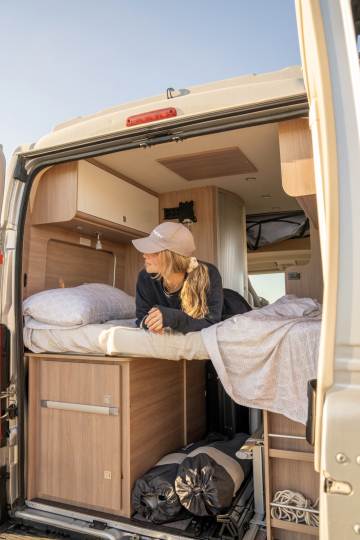
In recreational vehicles, the bed is not just somewhere to sleep. It is one of the elements that most influences the quality of the on-board experience. It determines how much space is available during the day, how easy it is to convert the living areas, and how comfortable users are at night. From fold-down beds in motorhomes to solutions above the dinette that appear only when needed and height-adjustable rear bunks that allow users to choose more garage space or a larger sleeping area, every configuration changes the way users experience their vehicle. For the past 10 years, Lippert Europe has been developing and offering bed systems designed as integrated solutions, not just individual components, blending mechanics, ergonomics, and space optimization. These systems are a tangible contribution to making motorhomes more versatile, more comfortable, and better suited to their users' real needs.
The innovation of lifting beds and increasingly advanced technology
Over time, product development has followed the transformations of the recreational vehicle market, which is increasingly focused on space optimization and increased comfort. One of the most significant innovations is the lifting bed system. These belt-driven solutions, with electric or manual operation, have helped redefine the interior architecture of vehicles, eliminating the traditional overcab bed and improving aerodynamics, fuel consumption, and space usability. Building on this technology, Lippert has developed increasingly sophisticated solutions, such as expanding systems with complex movements, to latest-generation products, like Nuvola, which is one of the most technologically advanced models in the portfolio today. Entry-level products have also benefited from significant engineering work focused on weight reduction, optimization of materials, and improved structural performance, whilst maintaining or even increasing load capacity.
Production capacity goes hand-in-hand with quality
In recent years, Lippert has achieved significant production levels, peaking in 2023 – a year of remarkably high demand for recreational vehicles – with around 134,000 beds made, whilst continuing to invest heavily in quality. “We have an entire area dedicated to testing at the factory”, explained Paolo Bernadeschi, Engineering Manager at Lippert’s Plant 307. “Every new product or custom design undergoes intensive testing cycles to ensure reliability and performance over time. This is now one of our key strengths”.
A milestone achieved following the merger of two Italian leaders
This milestone is the result of an industrial and technological journey that started several years ago, with the integration of two well-established companies in the sector: Project 2000 based in Calenzano, and ST.LA. based in Pontedera, both from Tuscany and both specializing in the design and manufacture of bed systems for recreational vehicles. “The merger of these two companies was a fundamental step”, said Paolo Bernadeschi. “We embarked on a process aimed at standardizing components and production processes, which has enabled us to improve efficiency, ensure consistent quality, and develop a more structured engineering approach, particularly in terms of product testing and validation”.
From specialization to an integrated industrial platform
Before joining Lippert, the two companies operated in distinct market segments: ST.LA. focused on simpler, more economical solutions, whilst Project 2000 concentrated on more complex, high-end products. The integration led to the creation of a single production platform, now based in Pontedera, capable of covering the entire product range.
The process was not without its challenges, which were addressed from the start through a change that adopted a customer-centered approach and co-development skills. “It is only fair to acknowledge that we made a few mistakes along the way”, added Bernadeschi. “This allowed us to create to a model closer to manufacturers’ needs, working together to solve problems and develop solutions, not imposing standards. Today, we are once again a technical partner and not just a supplier”.
A simple milestone on the path to growth
Exceeding half a million beds produced is an important milestone on a long path of continuous growth – and not a destination. “In recent years, we have worked to ensure that production capacity and quality could grow hand-in-hand”, concluded Bernadeschi. “Looking to the future, we will continue to invest in innovation, product development, and collaboration with our customers, to anticipate market developments and improve the experience aboard recreational vehicles”.


 App Camperonline