Winter motorhome tourism is experiencing steady growth. More and more travellers are choosing to embark on snowy weekends, mountain holidays or long European itineraries even during the coldest months of the year.
Travelling in winter, however, requires very different preparation compared to the summer season. Alongside managing heating, water and low temperatures, one of the most important aspects concerns the motorhome’s energy autonomy.
Cold, snow and shorter days increase electrical consumption and reduce the efficiency of some traditional energy systems. For this reason, more and more motorhome owners are turning to advanced solutions capable of guaranteeing continuous power even in difficult weather conditions.
Why motorhomes consume more energy in winter
During the cold months, a motorhome’s energy requirements increase considerably. This happens for several reasons.
First of all, the heating system works longer and more intensely. On top of this, there are lights left on for many hours, internal ventilation, the boiler, anti-freeze systems and electronic devices used during evening stops.
Very often, the following are also used on board:
- televisions;
- laptop computers;
- smartphones and tablets;
- Wi-Fi routers;
- coffee machines;
- compressor fridges.
All of these elements have a direct impact on daily energy consumption.
The result is that leisure batteries tend to discharge much more quickly than during summer trips.
The limits of solar panels in winter
Solar panels are one of the most widespread solutions for generating power in a motorhome. During winter, however, they can show some significant limitations.
Shorter days reduce the number of useful hours for charging. In addition, snow, clouds, rain and a low sun on the horizon considerably reduce the system’s energy output.
Where the motorhome is parked can also affect production. In the mountains or in wooded areas, stopping in shaded spots often means having inefficient panels for many consecutive hours.
This leads many motorhome owners to look for complementary solutions capable of guaranteeing continuous power regardless of weather conditions.
Fuel cells: constant power even in cold and bad weather
Among the most appreciated technologies for winter camping, fuel cells are emerging as systems designed to produce electricity automatically and continuously.
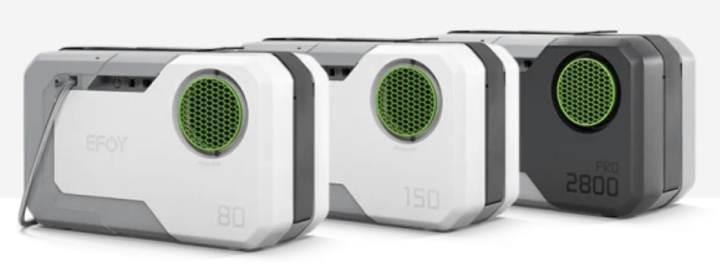
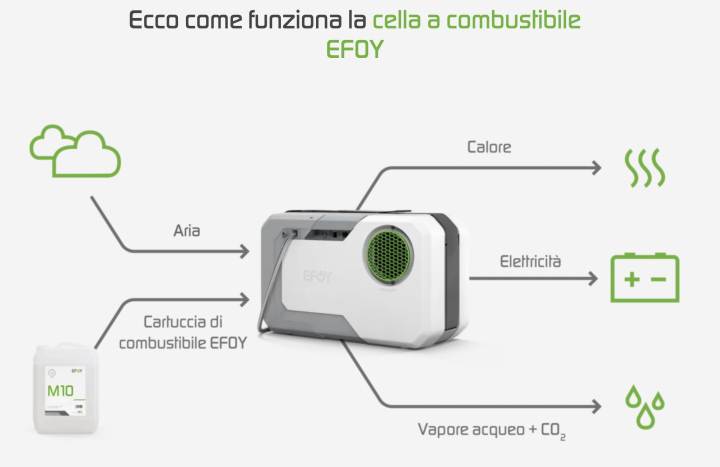
EFOY fuel cells use high-purity methanol to generate electricity for recharging leisure batteries.
The great advantage over solar power is that operation does not depend on sunshine or weather conditions. The system activates automatically when the battery discharges and continues producing energy for as long as necessary.
For those who enjoy winter touring, this means being able to cope with long off-grid stops without constantly worrying about remaining battery charge.
Quietness and comfort during stops in the snow
One of the aspects most appreciated by winter motorhome owners concerns comfort during overnight stops.
Traditional petrol or diesel generators produce noise and vibrations that can be bothersome, especially in natural settings or particularly quiet mountain campsites.
Fuel cells, on the other hand, operate extremely discreetly.
This makes it possible to maintain energy comfort without disturbing the relaxation of a stop or a good night’s rest.
For those who love spending nights surrounded by snow or away from the busiest tourist facilities, silence represents an important added value.
Lithium batteries and intelligent energy management
Besides energy production, the storage system also plays a fundamental role during winter.
More and more motorhome owners are choosing lithium batteries to improve autonomy and energy efficiency. Compared with traditional AGM or gel batteries, lithium offers:
- greater usable capacity;
- faster charging times;
- reduced weight;
- better management of charging cycles.
The combination of lithium batteries, solar panels and fuel cells today represents one of the most advanced configurations for tackling winter tourism in complete autonomy.
Many modern systems also include smartphone apps that allow users to monitor consumption, charge levels and the motorhome’s energy status in real time.
The importance of energy planning
Travelling in winter requires more careful energy management than in other seasons.
Before setting off, it is essential to assess:
- the number of devices used;
- the type of heating system installed;
- battery capacity;
- the presence of alternative charging systems;
- the expected duration of free stops.
Proper planning helps avoid autonomy issues and allows the trip to be enjoyed with greater peace of mind.
More and more experienced motorhome owners now consider the power system to be one of the central elements of their recreational vehicle.
Winter camping is growing across Europe
In recent years, outdoor winter tourism has grown significantly. Alpine resorts, natural areas and Nordic destinations are attracting more and more motorhome owners in search of authentic experiences that are less crowded than in the summer season.
This trend is also changing the way energy systems for modern motorhomes are designed.
The goal is no longer simply to have enough power for a weekend, but to be able to undertake long journeys in complete autonomy, even in difficult weather conditions.
It is precisely for this reason that technologies such as fuel cells are becoming increasingly central to the world of modern motorhome touring.
For many travellers today, true freedom means being able to stop anywhere, in any season, without depending on mains electricity or fully equipped campsites.


 App Camperonline