As the warm season approaches, millions of families begin planning their summer holidays. Seaside or mountains? Hotel or holiday resort? Italy or abroad?
Every year the choice comes round again, bringing with it the usual dilemmas linked to costs, logistics, comfort and freedom.
In recent years, however, more and more families have been choosing an alternative that combines freedom, comfort, long-term savings and a spirit of adventure: the motorhome holiday.
Buying a motorhome is a significant decision, and an extremely rewarding one too. It's an investment that goes well beyond a simple means of transport: it's a travel philosophy, a lifestyle that offers unique, memorable experiences that are often more affordable than one might think.
However, it's essential to weigh up this choice with a clear head, perhaps starting with a hire motorhome experience, in order to fully understand the benefits (and requirements) of this way of travelling.
The appeal of travelling in freedom
One of the main reasons a family should consider buying a motorhome is the extraordinary freedom this vehicle offers.
With a motorhome there are no check-in or check-out times, no suitcases to pack at every stop, and no need to book months in advance.
Each morning you can choose a new destination, depending on the weather, the children's mood or the urge to explore somewhere new.
Imagine a family with two children: waking up beside an Alpine lake, having breakfast outdoors with a view of the mountains, spending the afternoon cycling along trails, for example, in the Stelvio National Park, and the next day already on the road towards the Tuscan hills for a picnic among the cypress trees. All this without having to search for a suitable hotel or restaurant every time, without packing, unpacking and hauling suitcases, and with the peace of mind of always having your own “home” with you.
Comfort and practicality tailored to the family
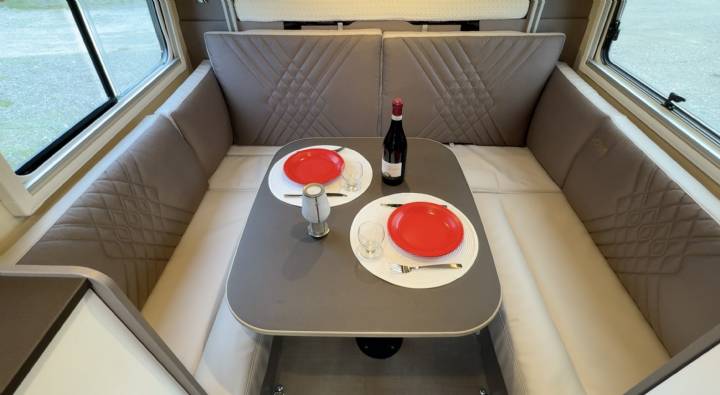
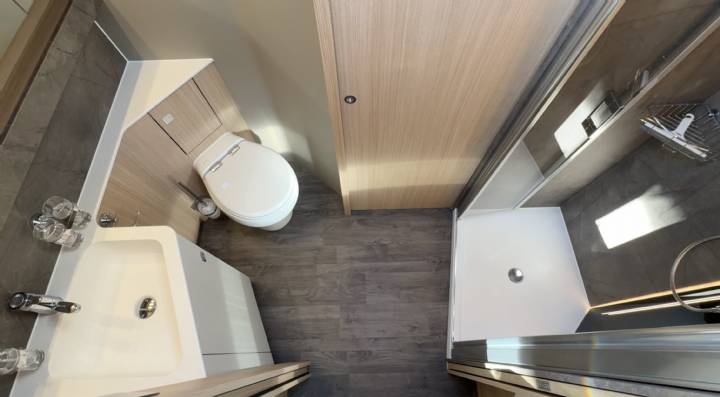
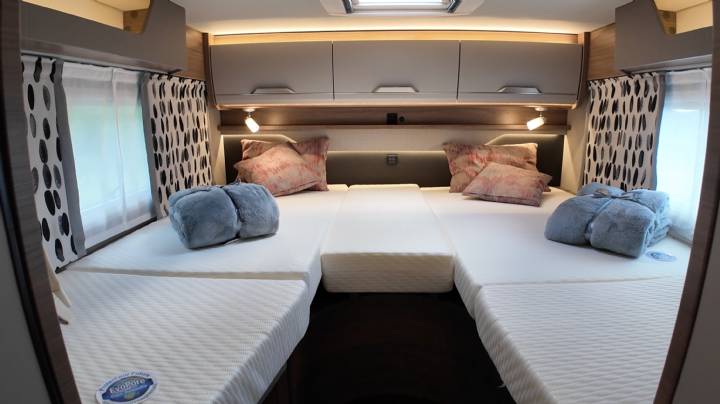
Modern motorhomes offer a surprising level of comfort. Comfortable beds, a fully equipped kitchen, a bathroom with shower and WC, heating, air conditioning, satellite TV, solar panels and spaces designed to make the most of every centimetre. Some models, ideal for families, also feature bunk beds, a bike garage and pull-out tables for dining outdoors.
For children, the motorhome is a small adventure on wheels. A space they can call their own, where they can bring toys, books, musical instruments. A familiar and safe environment that reduces the anxiety of constantly changing hotels or destinations.
And for the parents? No more bags to carry, no rigid timetables to stick to, zero stress in finding a “baby-friendly” restaurant. The kitchen is always available, the bed is always ready, and managing the holiday becomes far more flexible and relaxed.
An investment that pays for itself over time
Buying a motorhome, it's true, involves a significant initial outlay. A
new motorhome starts at around 50,000 euros for basic models, and can exceed 90,000/100,000 euros for more fully equipped versions. However, it's important to consider the investment from a long-term perspective.
A family of four who spend two weeks every year at a holiday destination, staying in hotels or holiday villages, can easily spend between 3,000 and 5,000 euros, excluding meals out, excursions and transport. Over ten years, the total cost of these holidays can exceed 40,000 euros, not counting additional expenses.
With a motorhome, fixed costs are concentrated on the initial purchase, maintenance (around 500-1,000 euros a year), insurance (which varies depending on the cover required, and can start from 300-400 euros a year), road tax (less than 150 euros a year), and storage (250-900 euros a year, or more, depending on the area and whether it's covered or not).
On top of this come fuel costs (8-10 litres per 100 km for the more nimble vehicles, 10-12 for larger ones) and any stays at campsites or
service areas, which normally range from 10 to 30 euros a night – far less than a hotel. There are also larger, well-organised and welcoming establishments, with extensive, comprehensive services, which can cost considerably more (50/70/100 euros a night or more), and which guarantee
top-level holidays.
What's more, many motorhomes retain their value well over time: the initial investment isn't entirely lost, but can be recovered or put towards replacing the vehicle with one better suited to the family's changing needs.
And it shouldn't be overlooked that, for the initial purchase, one can also turn to the
used motorhome market, where there are options to suit every budget.
But one factor should not be forgotten: a motorhome can be used for
travel throughout the year, even for short weekend getaways, long weekends or public holidays, considerably increasing its usefulness compared with a single summer holiday.
It can also be used for certain professions, for example enabling "
smart working" which has recently grown in popularity and is widely used across many sectors.
Business trips, transporting samples, digital work carried out in ever-changing locations are just some of the
activities for which a motorhome is often the ideal solution.
To sum up: of course, a motorhome involves an initial cost to be recouped, but over the medium-to-long term, especially for families who love to travel often, the financial benefits become clear.
Hiring: a smart step before any purchase
Despite the advantages, buying a motorhome isn't a decision to be taken lightly. It's important to get to know the vehicle, try it out, and understand whether this type of holiday fits your needs and habits. For this reason, before buying, it's highly advisable to gain some experience with
hire motorhomes.
Many companies in Italy offer motorhome hire for weekends or full weeks. Costs range from 90 to 150/180/200 euros a day or more, depending on the model and season. Hiring a motorhome for a weekend allows the family to:
\t- Test how to manage the space (especially with children).
\t- Learn how to use the systems (water, gas, electricity).
\t- Check how comfortable it is to drive and park.
\t- Assess loading/unloading wastewater (a practical aspect that shouldn't be underestimated).
\t- Understand whether you prefer a “touring” style of travel or a more static one.
After a couple of weekends in a motorhome, many families realise just how simple and natural this type of holiday can be.
Others, on the other hand, may decide it isn't for them, thereby avoiding an investment that could have proved a mistake.
Either way,
hiring is a smart move.
Where and how to buy a motorhome
If, after the hire experience, the family decides to buy a motorhome, there are numerous options available.
As well as official dealerships, there are specialist trade shows (the biggest in Italy is the
Salone del Camper in Parma, held in September) where various models can be compared, and there are, of course, plenty of online listings offering
new motorhomes and
dealer-guaranteed used vehicles, as well as
private sellers' offers.
As for construction types, you can choose from:
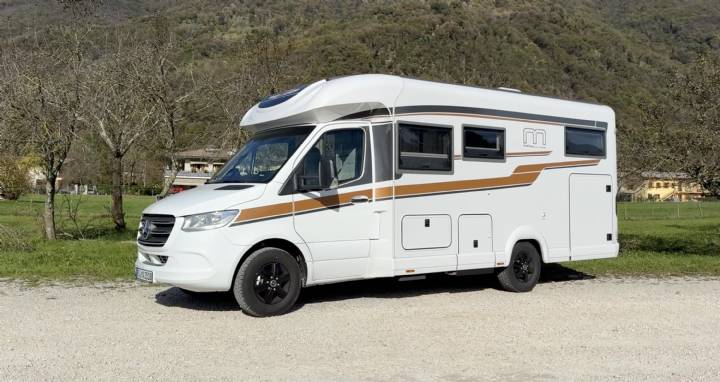
\t- Over-cab motorhome: ideal for families, with a bed above the driving cab.
\t- Low-profile motorhome: more aerodynamic and compact, but with less interior space.
\t- A-class motorhome: panoramic, luxurious and spacious, but also more expensive.
\t- Vans or camper vans: well-suited to couples or small families looking for agility.
It's important to carefully assess space requirements, the number of homologated seats/berths for travelling and sleeping, on-board autonomy (water, power, gas) and technical specifications.
Here's our tutorial for those new to this world who want to start getting a clearer picture.
Sustainable holidays, close to nature
Another aspect not to be underestimated is environmental sustainability and the opportunity, with a motorhome, to experience life in close contact with nature.
Many modern motorhomes are fitted with solar panels, long-life batteries and low-consumption systems.
Furthermore, motorhome tourism, when practised with respect for the environment and local rules, has a far smaller impact than mass tourism in traditional accommodation.
Sleeping in the middle of the woods, on the shores of a lake or by the sea (where permitted), waking the children to birdsong or the sound of waves, is an educational and rejuvenating experience that leaves a lasting mark on family memories. And it teaches the importance of not wasting energy and water, precious resources whose availability on board is truly appreciated.
Final thoughts
Buying a motorhome - for holidays and, as we've seen, not only for that - isn't purely a matter of comfort or savings: it's a way to
reclaim time, to live slowly and mindfully, to share genuine moments as a family. It's a concrete, real and ever-growing solution, one that wins over more and more Italian and European families every year.




 App Camperonline