In recent years the concept of motorhome travel has changed profoundly. More and more travellers are seeking freedom, self-sufficiency and the chance to camp away from equipped campsites or charging stations. Against this backdrop, energy independence has become one of the most important aspects for anyone experiencing modern touring in a truly contemporary way.
Among the solutions attracting the attention of the motorhome community are
fuel cells, intelligent systems capable of
producing electricity automatically, silently and continuously. A technology that until a few years ago was considered niche, but which is now being chosen by a growing number of users.
Why energy has become central to the motorhome world
Life on the road in a motorhome today requires
far more energy than in the past. Compressor fridges, smart TVs, laptops, air conditioning units, Wi-Fi routers, LED lighting and mobile devices have significantly increased energy requirements during trips.
For this reason, traditional leisure batteries are often no longer sufficient, particularly during extended off-grid stays or in winter, when solar panels generate less power.
As a result, many motorhome owners now share a single goal: achieving genuine energy independence without having to rely on noisy generators or constant recharging at campsites.
Fuel cells: how they work
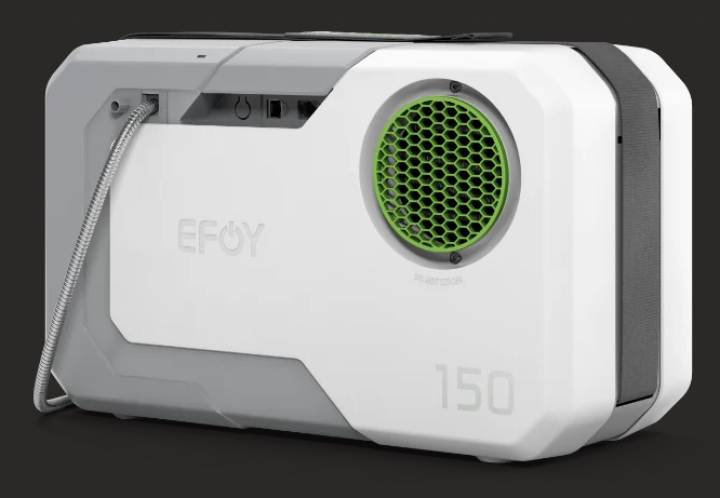
EFOY fuel cells use high-purity methanol to generate electricity continuously. The system automatically monitors the motorhome’s battery charge and steps in only when needed, recharging it without any manual intervention.
Unlike traditional generators, this system does not produce intrusive noise and requires no particular maintenance. Operation is entirely automatic: when the battery drops below a certain threshold, the fuel cell activates; once charging is complete, it returns to standby.
In practical terms, this means being able to use onboard appliances even during long off-grid stays, without any worry about running out of power.
The advantage most appreciated by motorhome owners: silence
One of the aspects travellers value most is undoubtedly quietness. EFOY fuel cells produce a noise level comparable to that of a laptop cooling fan.
This represents a huge advantage over conventional petrol or diesel generators, which are often banned in many camping and rest areas due to noise pollution.
For those who love the mountains, lakeside stops or parking spots immersed in nature, acoustic comfort becomes a fundamental element of the travel experience.
Power even in winter and bad weather
One of the main limitations of solar energy lies in its dependence on weather conditions. In winter, on cloudy days or when parked in the shade, solar panels may not be enough to cover a motorhome’s energy consumption.
Fuel cells, on the other hand, work independently of the weather, guaranteeing constant energy production in any season.
This is particularly important for those who enjoy winter touring, love the mountains or use their motorhome for long trips across Northern Europe.
A compact system designed for recreational vehicles
Another factor contributing to the spread of this technology is its compact size.
EFOY models are small and lightweight, key characteristics for installation inside motorhomes and camper vans.
The latest generations have been designed specifically to take up less space and integrate easily into existing electrical systems. What’s more, the system can be managed via a dedicated app, allowing direct control from a smartphone or tablet.
The ability to monitor consumption, battery status and fuel level directly from a phone is a feature much appreciated by more tech-savvy users.
Combining lithium batteries and solar panels
One of the most interesting trends in the motorhome sector concerns hybrid energy systems. Fuel cells are in fact often paired with lithium batteries and solar installations.
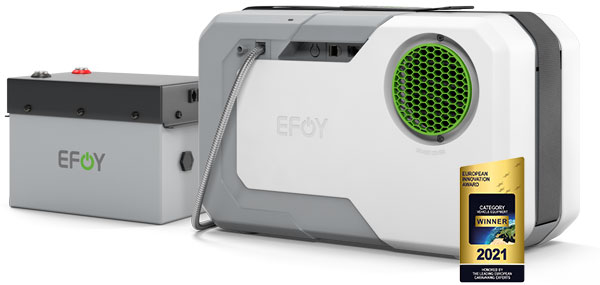
The
EFOY Hybrid Power solution was designed with precisely this philosophy in mind: the battery stores energy, while the fuel cell steps in automatically whenever needed, optimising consumption and efficiency.
This approach helps reduce waste, increase autonomy and tackle long journeys without constantly worrying about recharging.
Will the future of camping be increasingly self-sufficient?
The evolution of outdoor tourism is heading in a clear direction: more freedom, fewer constraints and greater sustainability.
Fuel cells today represent one of the most interesting technologies for those who want to experience motorhome travel without energy compromises. Silent, automatic and always operational, they are transforming the very concept of independence on the road.
For many motorhome owners, this is no longer simply an accessory, but a genuine paradigm shift in the way they experience life on the road.




 App Camperonline