Planning a
motorhome trip towards the eastern shore of the Adriatic means choosing between two very different approaches. On one hand, there’s the route entirely by road, which leaves plenty of freedom to stop off along the way; on the other, there’s the sea crossing, which shortens the overland journey and turns the transfer into part of the holiday itself.
To get your bearings among routes and useful ports, it can be handy to start with the
Adriatic Sea ferry map, which gives a clear overview of the routes between Italy and the Balkans. Connections between Italian ports such as
Bari,
Ancona and
Trieste and destinations such as
Split,
Durrës and
Dubrovnik include several lines that vary according to the season.
For a vehicle like a
motorhome, the choice isn’t just about the price of the ticket. Other factors come into play: the kilometres avoided, fuel consumption, wear and tear on the vehicle, summer traffic along the Croatian coast, border crossing times and, not least, the overall quality of the journey. Spending many hours behind the wheel on congested roads is not the same as boarding a ferry, having dinner and setting off again the next morning already on the other side of the sea. That’s exactly where the real value lies.
Understanding when the ferry truly makes a difference
To reach
northern Croatia, the ferry isn’t always the best option. If the destination is Istria, Kvarner or an area not too far from the Slovenian border, travelling overland often remains a straightforward and more flexible choice. Things change as the route heads further south towards central and southern Dalmatia, where the coastal road can become slow, particularly during peak season.
The companies currently operating clearly illustrate this difference. Jadrolinija connects Italy to Croatia with routes such as Split-Ancona, Split-Bari, Dubrovnik-Bari and the fast Zadar-Ancona line; SNAV markets the Ancona-Split connection; Adria Ferries operates towards Durrës from Ancona, Bari and Trieste; Grimaldi Lines connects Brindisi and Igoumenitsa with daily departures. Bari-Durrës, for example, is listed by Adria Ferries as a
daily, year-round route, with a crossing of around 8 hours, while Brindisi-Igoumenitsa is offered by Grimaldi as a daily connection also suitable for motorhomes and vans.
The
value of the ferry therefore increases along with the overland distance that would otherwise need to be covered. The further the destination from the Italian border, the more appealing it becomes to cut diagonally across the Adriatic rather than follow the entire coastline.
The situations where it pays off most
There are a few cases in which choosing the
ferry is particularly sensible:
• Istria and northern Croatia - for destinations relatively close to north-eastern Italy, the road often remains the most practical solution, especially if the itinerary includes intermediate stops.
• Split and central Dalmatia - a crossing from Ancona or Bari makes it possible to avoid a long overland transfer and cuts out plenty of driving hours during periods of heavy traffic. The Italy-Croatia routes operated by Jadrolinija and SNAV make this a genuinely practical option.
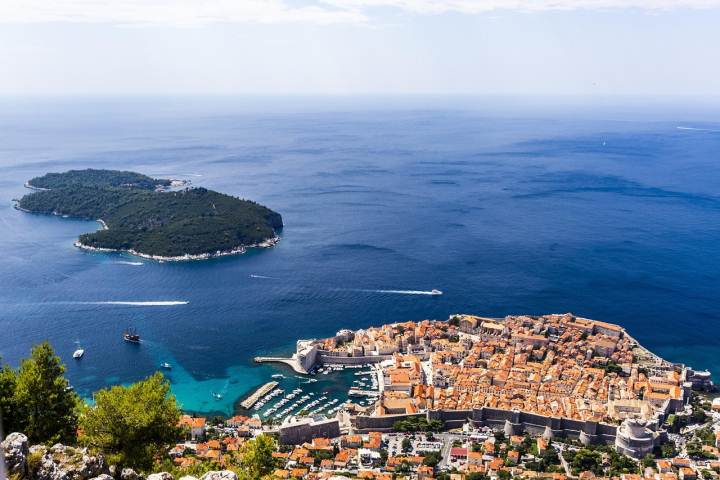
• Southern Croatia and the Dubrovnik area - the ferry makes even more sense here, as it removes the longest and least fluid part of the overland route. Jadrolinija also operates the Dubrovnik-Bari route.
• Albania - Bari-Durrës and Ancona-Durrës are well-established, frequent connections; in this case, crossing the sea avoids a much longer and more demanding overland route. Adria Ferries also highlights multiple weekly departures from the Italian cities served.
• Western Greece - for Epirus, and for those wanting to continue exploring the country with their own vehicle, boarding at Brindisi for Igoumenitsa is often a sensible choice, not least because it allows disembarkation already at a strategic point on the Greek coast.
Real costs, kilometres saved and time gained
The economic comparison between road and sea needs to be considered
in full, not simply stopping at the initial ticket price. A motorhome uses more fuel than a car, is more likely to incur costly motorway tolls, suffers more from traffic, and often requires an overnight stop at a service area or campsite during very long transfers. In these situations, the ferry may absorb part of the expense, but it can help save money elsewhere.
The kilometres saved aren’t the same for every route, but the principle is simple: boarding at Ancona, Bari or Brindisi avoids having to travel the whole way down the eastern Adriatic coast. For destinations such as Split, Durrës or Igoumenitsa, this cuts
several hundred kilometres compared with travelling entirely overland, with a noticeable reduction in fatigue too. The advantage grows during the summer months, when queues, slowdowns and border crossings can extend the journey well beyond the expected times.
There’s also the matter of
useful time. An overnight crossing often allows travellers to have dinner on board, rest, and start driving again the following morning already in the destination country. For a crew keen to reach their holiday sooner and spend fewer hours in transit, this option can be worth almost as much as a financial discount.
The departure ports can already be a stop in their own right
The port of departure is also worth paying attention to, as a well-planned embarkation can turn into a small visit before boarding.
Ancona, for example, is home to the Mole Vanvitelliana right within the port area, along with a distinctive seafront urban profile; local tourist guides describe the city as one closely tied to its port and its Adriatic connections.
Bari lends itself well to a stroll through Bari Vecchia and around the Basilica of San Nicola before boarding, with a historic centre that unfolds between the old port and the seafront.
Brindisi, meanwhile, retains a very strong bond with its natural harbour: the Roman Columns overlooking the port remain one of the city’s most recognisable landmarks and help set a genuinely Mediterranean tone for the journey right from the start.
Scheduling a departure for the following morning or late afternoon thus allows the port to be used as a
gateway to the holiday, rather than simply experienced as a place to wait.
Where you land and how to book best
Arrival can be just as interesting as departure.
Split has the advantage of offering an immediately charming urban setting, with
Diocletian’s Palace at the heart of the historic complex recognised by UNESCO. Arriving here by motorhome means finding yourself already in an excellent base for exploring Dalmatia.
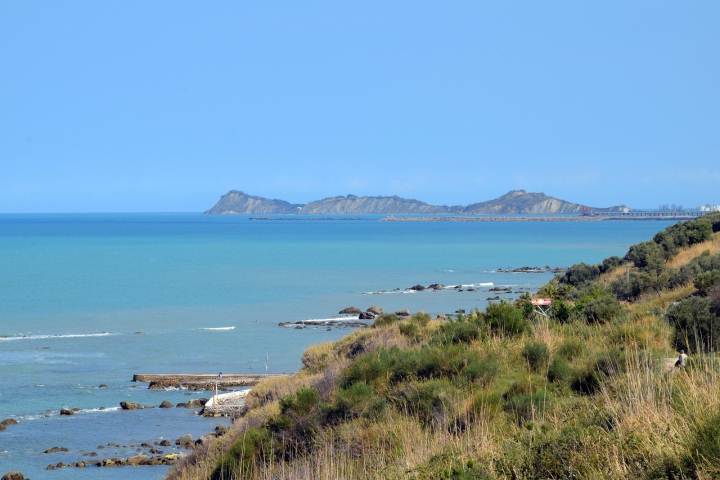
Durrës offers a practical landing point for coastal Albania and is home to one of the most significant Roman amphitheatres in the Balkan area.
Igoumenitsa, meanwhile, is an effective gateway to western Greece and to inland routes that lead quickly from the coast into Epirus.
Booking in advance can also make a significant difference to the final cost.
For 2026, Grimaldi Lines is offering an Advanced Booking deal with a 20% discount on selected departures to Greece, alongside a Super Camper promotion offering a 15% reduction on fares for motorhomes up to 9 metres and a Camper & Meals package with a 30% discount on on-board meals on the routes concerned.
Adria Ferries, meanwhile, offers Early Booking benefits available all year round on the Bari-Durrës route, along with promotions dedicated to motorhome owners and affiliated associations.
On Ferrygogo Italia you’ll find a simple overview of Adriatic connections, useful for quickly working out whether it’s worth crossing by sea or continuing by road.
Ultimately, the best choice depends on the final destination and the style of the trip. For short, highly flexible routes, the road retains its appeal. For more distant destinations, summer holidays and transfers that risk draining too much energy, the
ferry often proves to be the smartest, most comfortable and most enjoyable solution.


 App Camperonline